To Carb or Not to Carb? How to fuel your running for performance & recovery
Carbohydrates have long been known as the key to race-day fuel, but increasing research shows they are just as essential for training, recovery, and long-term performance. Carbs should be your best friend if you want to run stronger, recover faster, and hit your race goals.
Why Carbs Matter for Runners
Our body primarily relies on glycogen (stored carbohydrates) as fuel when we run. The longer or more intense the session, the more glycogen we burn. Without enough stored energy, performance suffers, we slow down, struggle to finish strong, or worse, hit the dreaded wall.
Training in a fasted state or not refueling correctly after a run can lead to:
- Decreased endurance & performance.
- Increased fatigue & injury risk.
- Poor recovery & muscle breakdown.
- Hormonal imbalances, especially in female athletes.
How Much Fuel Do You Really Need?
Your carbohydrate intake should match your training volume to ensure you’re properly fuelling your body. Here’s a breakdown of how much to eat before and during your runs, depending on their duration:
Pre-Run Fueling Guide
- Runs under 60 minutes: 0.5-1g of carbs per kg of body weight
- Example for a 60kg runner: 30-60g carbs.
- Food ideas: A banana with peanut butter, toast with honey, half a bagel.
- Runs 60–90 minutes: 1-2g of carbs per kg of body weight
- Example for a 60kg runner: 60-120g carbs.
- Food ideas: Porridge with fruit, Greek yogurt with granola, energy bar
- Runs over 90 minutes: 2-3g of carbs per kg of body weight.
- Example for a 60kg runner: 120-180g carbs.
- Food ideas: Rice with chicken, oats with honey and nuts, a bagel with jam.
For morning runners who struggle with eating before training, try something light such as:
- A few spoonful’s of yoghurt.
- Half a banana.
- A small handful of granola.
Even a little fuel is better than none and will help improve performance.
During-Run Fueling Guide
Once your run exceeds 60 minutes, fuelling during the session helps maintain energy, endurance, and recovery.
- Runs 60–90 minutes: 30g of carbs per hour
- Example: 1 energy gel or a banana
- Runs 90 minutes – 2 hours: 30–60g of carbs per hour
- Example: 1-2 gels, chews, or sports drinks
- Runs over 2 hours: 60–90g of carbs per hour
- Example: 2-3 gels, a mix of sports drink and real food (dates, rice cakes)
- Runs over 3 hours (marathon/ultras): 90g+ of carbs per hour
- Example: A combination of gels, drinks, and whole foods
Want to personalise your fueling strategy? Use the free calculator on the Precision Fuel & Hydration website here to estimate your carb needs for race day or book a free chat with Georgie.
DIY Fueling Options for Training
Store-bought gels and bars can get expensive, but homemade options also work.
Here are some easy recipes for fuelling your runs adapted from Nancy Clark’s Sports Nutrition Guidebook and Run Fast, Cook, Fast, Eat Slow by Shalane Flanagan and Elyse Kopecky:
Maple Sports Drink (12g carbs per serving)
- 900ml cold water.
- 60ml pure maple syrup.
- ¼ tsp salt.
- Mix and enjoy!
Homemade Sports Drink (12g carbs per serving)
- 50g sugar.
- ¼ tsp salt.
- 60ml orange juice.
- 2 tbsp lemon juice.
- 840ml cold water.
- Dissolve sugar and salt in hot water, then mix in the juices and chill.
Energy Squeeze (28g carbs per serving)
- ½ cup mashed sweet potato.
- ½ cup chopped dates.
- 2 tbsp peanut butter.
- 1 tsp chia seeds (optional).
- ⅛ tsp sea salt.
- Mix everything together and store in resealable snack bags.
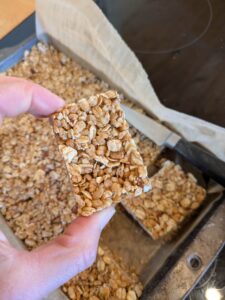
Sweet and Crispy Almond Bars (24g carbs per serving)
- 2 cups (160g) uncooked oats.
- 2 cups (160g) Rice Crispies or puffed rice cereal.
- 1 cup (120g) slivered almonds/ chopped nuts.
- 1/2 cup almond butter.
- 1/2 cup honey or brown rice syrup.
- 1/2 tsp salt (optional).
- Stir dry ingredients together. Melt nut butter & honey in microwave for 2-3mins, stirring occasionally. Mix dry & wet ingredients together. Press firmly into a lined/ greased 9×13 inch (23 x 33cm) baking dish. Cool until firm. Cut into 20 bars and store in an airtight container.
Post-Run Recovery: The Key to Faster Progress
After training, your muscles need both carbs and protein to recover.
Within 30–60 minutes post-run, aim for:
- Carbs: 1-1.2g per kg of body weight
- Protein: 20–30g
Examples of great post-run meals/snacks:
- A smoothie with banana, greek yoghurt, protein powder, and oats.
- Eggs on toast with avocado.
- Chicken and rice.
- A protein shake with fruit and granola.
Fuel Right, Run Stronger, Recover Faster
Coach Georgie used to think nothing of running 90 minutes on an empty stomach and take nothing with her. Now, she always fuel before and during longer runs, and her training, recovery, and mood have never been better.
If you want to improve your performance, recover faster, and hit your running goals, join our one-hour nutrition workshop on Wednesday, 12th March led by Nutritionist Georgie. See this link for full details and to sign up.