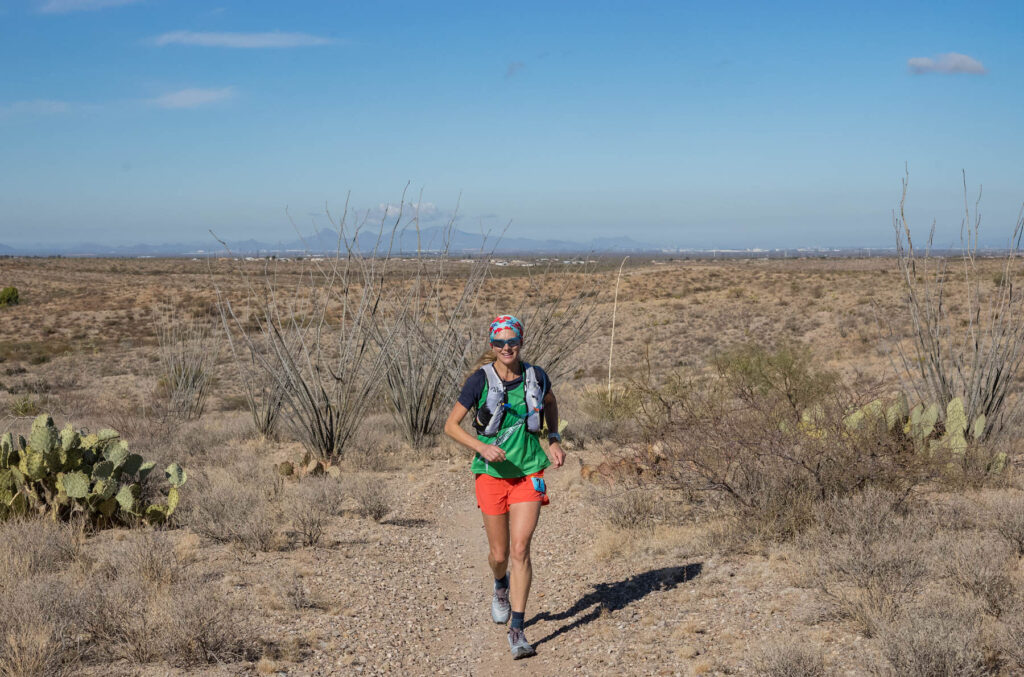
This winter I took part in the Southern Arizona Triple 50 – a series of fifty-mile trail races in three different locations across the Sonoran Desert. Although there were some similarities between the races, each one had a unique course profile and required a tailored approach. There was also the element of timing to consider in preparing for the events – there were seven weeks between the first two races (December 2nd and January 27th), and then only five weeks until the last one on March 2nd. After completing three fifties in three months what have I learnt? Here are the three main takeaways.
- Post-race Recovery is Key
Without a doubt recovering fully between the races was very important to avoid injury and/ or burnout. But what does that mean and what are the most important elements of recovery? In a nutshell, long distance events cause the body to break down (this article highlights some of the effects on ultra-runners’ physiology after a 100 mile race). To begin the process of repairing the body, there are a number of strategies you can follow. Over the last few years, through some trial and error, I have found that extra protein makes a big difference to how I feel and function after a big physical effort. This can be done through whole foods however I’ve discovered that whey protein powder works well for my digestive system (I do also occasionally use hemp protein powder, which is a good vegan option). Within 30mins of finishing each race I drank 2 scoops of GU Roctane Protein Powder mixed with water, and then tried to eat a meal within the next hour or so. Further practices I’ve used in the last three months to assist recovery include Epsom salts baths, compression socks, drinking lots of water and turmeric lattes (which sound fancy but are very easy to make at home), very gentle activity (think slow yoga and mobility, walking, gentle foam rolling) and aiming for 8 hours sleep most nights. In full transparency, the night immediately after each race I found it hard to sleep due to waking up hungry (despite the extra protein), twitchy legs and sore toes. To remedy this, I would sleep-walk to the kitchen, prepare a big bowl of yogurt with granola and take two ibuprofens with a glass of water. It doesn’t seem to matter which shoes I wear but blood blisters always develop under my toenails after long races and painkillers are the only thing that help relieve the initial discomfort (along with draining the fluid the next day). But don’t let my small toenail debacle deter you from seeing the world thanks to running through beautiful country.
- How Race Day Fuel & Hydration is Essential
In the lead up to the first race in December, I spent three months training my body to handle more carbohydrates during long runs (14-25 miles) and even on some medium length runs (~10miles). This was a process that involved lots of testing and just going for it too! Luckily, thanks to the development of the new, more ‘flowing’ gels such as those made by Precision Fuel and Hydration and Maurten, it is easier to consume gels on the move than it used to be when I first started using fuel with gels in marathons (and I didn’t use one single gel in my first marathon in 2008!). I’ve also developed a system where I have three different types of liquids in my hydration pack: 1. Water in the main reservoir (in the back of the pack); 2. Liquid carbs in one soft flask; and 3. Liquid electrolytes in the second soft flask (both soft flasks are carried on the front). This gives me a range of hydration options, electrolytes and extra carbs too. The fueling plan that I followed, which mostly worked was to eat 1x 90g C gel pack from PFH within the first hour, then 2x 25g C Maurten gels in the next hour along with a Maurten carbohydrate drink – and repeat. I also refilled my soft-flask with carbohydrate drink mix from my drop-bags at aid-stations on the course. It takes quite a lot of discipline and concentration to keep up with the gel consumption, and usually I started to find it difficult around mile 30. I found that I needed to reset mentally around mile 35, which gave me a second wind for the last 10 miles. On average, when I looked back through my empty gel packets (which I save to recycle with TerraCycle), I managed to consume on average 65g C per hour. Over the series of races, I started making myself eat more solid food from the aid stations to contribute to the fueling total. Boiled potatoes dipped in salt, pretzels, and watermelon all worked well. In the last race, the Old Pueblo 50, which had the most climbing, I needed some cups of fizzy pop/ soda too and drank ginger ale at about mile 35 and then Coca-Cola at mile 41. Overall, I can say this is the highest amount of fuel and hydration I’ve ever used in ultra-running events, and it makes a difference – not only in race-day performance but also in recovery – as stated above – food is what your body needs to keep moving, rebuild and stay strong.

- The Power of a Purposeful Mindset
The power of the mind in ultra-running, or any sport can not be understated. Looking back, I think mentally I was so committed to completing this series of races, that I didn’t let doubt creep in as to whether I would finish (even when a head-cold nearly derailed the last event I felt sure I would find a way to make it around the course). I also had confidence in my preparation thanks to working with an ultra-running coach for the last eight months.
Interestingly, these words of advice from my coach also made an impact, “low mood, eat food” – which only highlights the importance of point two above – how race day fuel and hydration are intrinsically linked to the ability of your brain to function and think clearly – vital for any endurance event.
As a yoga student, I am also a huge fan of mantras. For each race, I wrote down a mantra that helped me to set an intention for the race and gave my thoughts something to connect with during tough moments. My mantras for each race were as follows:
- “Strength and Ease.”
- “Be in the present moment. NOW.”
- “Fueling. Pacing. Mindset.”
I also wrote down three goals for each race, which were centered around running with respect for the Indigenous people whose lands we traversed during the events, having fun, and finishing in the top three. Goals provide more tangible aspects to focus on during a race, and just like a mantra, can help to guide thoughts during a race.
Developing a strong sense of purpose as to why I am running has also made a huge difference when it comes to how I race over the years. I think it became more solidified as I started training to break three hours in the marathon – the fixation on the time didn’t feel good or make the process very fun. Thankfully, with some reframing and an examination of how running fits into life (which eventually led to the founding of LRC with Georgie), I found more joy in the journey and running became a community focused endeavor (and I eventually ran 2:58 in 2016!).
In this series of ultras, developing a mindset of gratitude has also played a critical role. Maybe it’s just me, but ever since the pandemic I’ve felt more and more grateful for the chance and ability to get out and go trail running. I try not to take it for granted, and it seems to make me more determined. I’m lucky to have these opportunities right now. It won’t last forever.
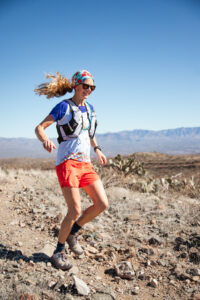
I hope these takeaways provide you with a few insights that you can apply to your own training and future endurance events. Which words of my own advice will I be taking with me in the next few months as I prepare for another ultra-running adventure – the Cocodona 250? It boils down to good recovery practices after heavy training days, working on my toe-nail-saving strategies, lots of good food and soothing drinks, and remembering the bigger picture.
Thanks for reading! Happy trails,
Susie.