Welcome to the first in a series of interviews with athletes who are ‘going the extra mile’. What does that mean? The exact definition is fairly broad and technically we are all going the extra mile right now – we have just adopted it to signify those who make a difference somewhere in the world – aside from what they do as athletes. The conversations will be with people who use the fitness they have acquired as a spark to spread a little light and love in other areas of the world. We will be talking to a wide range of people and these interviews form part of our 27.2 Project. *We don’t ever want to take anything away from the fact that being athletic alongside family and work is the first place to start making a difference – fitting in tough training sessions between everything else in life is amazing and enough – you never know who you are inspiring!
27.2 Action Athlete: Malia Nanbara
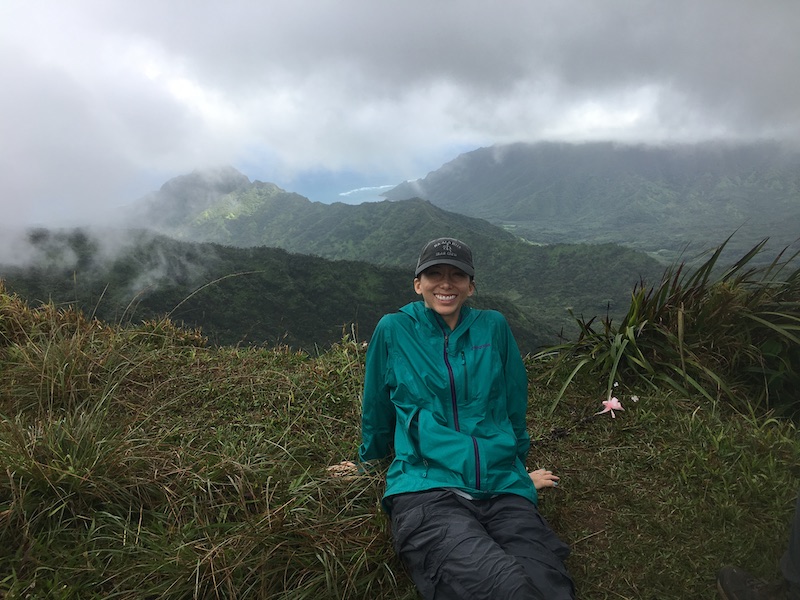
LRC: Hi, Malia! Thanks for taking time out of your work schedule to chat about running and your career in the environmental sector. Let’s start with a quick introduction to who you are and what you do.
MALIA: Hi, my name is Malia Nanbara. I’ve been living in Hawaii for eight years and grew up coming here a lot as a kid since my family is from here. I lived in Long Beach, California, where I ran in high school and then I ran for the University of California, Santa Cruz, which was really fun. I love my teammates and continue running with them whenever I go back. In Hawai’i I’ve been doing lots of recreational running (author edit: qualifying to run the Boston marathon in the process) and I also coach high school track and cross-country. I currently work as the Program Coordinator for the Partners for Fish and Wildlife Program at the US Fish and Wildlife Service. The Partners Program provides technical and financial assistance to private landowners to restore and enhance native species habitat.
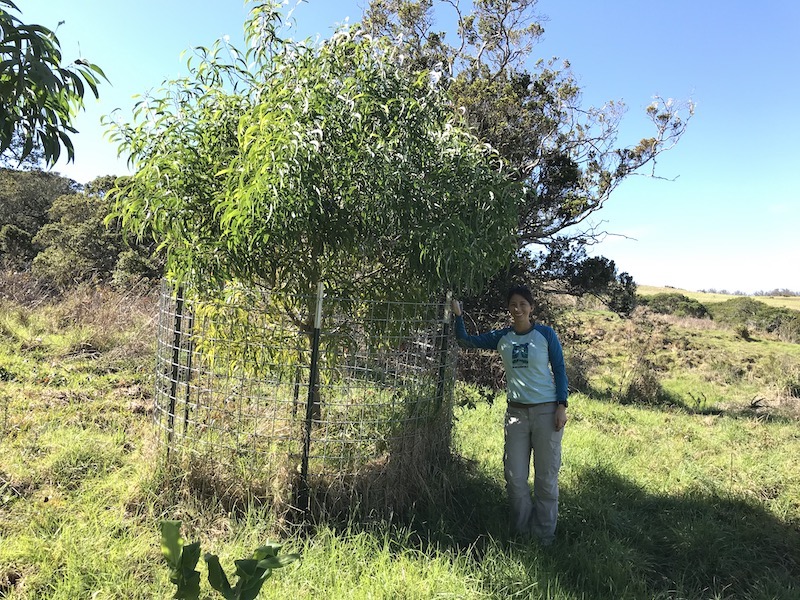
LRC: Have you always been interested in the environment?
MALIA: The big game changer for me was taking an environmental studies class in high school. After the first class I went home and wanted to tell everybody about what I had learned that day. Initially I applied to colleges and Universities with the plan to major in business but in the process of taking the class I realized that environmental issues were something I was passionate about, so I decided to change my college applications. But I also like to make the joke that my favorite movie growing up was Pocahontas and my birthday happens to be the day after Earth Day, so I probably should have figured out earlier that the environment is something I care about deeply.
LRC: Was there something specific that made the difference?
MALIA: I think really it was the subject matter and the fact that even though there is this huge world around us – you can make little changes and they can have a bigger effect. I grew up in the suburbs of Southern California and there weren’t many opportunities to get out into nature but whenever I did I always loved every minute.
LRC: What exactly did you study in college?
Malia: I have a Bachelor of Arts in Environmental Studies from the University of California Santa Cruz. Many of my classmates are now working in green energy policy and renewables, and others are looking at sustainable farming practices. I also thought I was going to go into the green energy policy field but then luckily I was able to study abroad in New Zealand. When I was there I took a Natural Resources monitoring class and realized I didn’t mind being outside all the time doing research and collecting data. We looked at micro invertebrates and what they might mean for the water quality of the stream that we are measuring, and so that was kind of where I switched over to the natural resources management side of the focus in environmental studies.
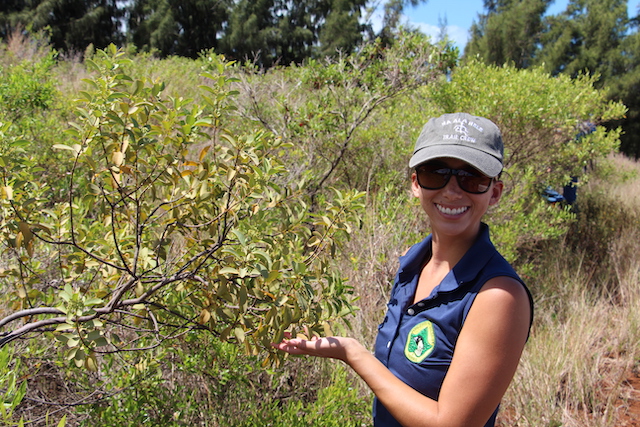
LRC: Obviously throughout college you were weaving running between all of this. Post-college how do you manage the work-life-sport balance?
MALIA: When I first moved to Hawaii I had some family but I didn’t have a ton of friends. I’ve always been very team oriented and often look to sport for opportunities to try and meet new people – because in the past that’s always where I had met really great people. And so I joined a co-ed soccer team, a women’s soccer team and a few different running groups in town! Looking back I was probably a little burnt out from doing too much after work but I was also accustomed to full athletic training schedule after doing it for so many years. I wanted to take advantage of it before the energy and enthusiasm faded away. With that very structured training set-up in place I did a lot of races during my first Hawai’i winter! The next year I took a little bit of a break to relax in the offseason to try to find a better work-life balance with my new job, which included making friends outside of running and soccer to offer more perspective on life.
LRC: Do you feel that being a runner has informed your connection to the environment and your current work in any way, or maybe vice-a-versa?
MALIA: Yes, I think they definitely influence each other. The first place I really saw and felt that happening was when I would go running in Santa Cruz because the University campus is so gorgeous and you’re basically running through Redwood forests all the time and walking to class through beautiful trees. In Hawai`i I would say it definitely plays a role! For example, on the rare day I have a chance to go trail running I begin to immediately recognize that there is this a huge need for recreational opportunities but that balancing the needs of a wide variety of user groups is very complicated. We need to find a middle ground where recreation isn’t impacting the forest too much but still gives people a chance to really connect with the outdoor, wild and green environment. Because if you don’t get that opportunity, how are you possibly going to continue to care for those places. Also, when I’m street running (which is most of the time) it’s more fun now thanks to a project with an urban forest group. I started to notice that I was running around not only looking at the ground for potential obstacles (because I’m fairly clumsy) but also leaves or flowers from trees, which I then try to identify on-the-go! Now I look for signs of native urban trees or other non-native urban trees all the time!
LRC: Trees are really amazing!
MALIA: Yes! There are so many benefits from trees that are unseen in day to day life. In the city of Honolulu over the last few years they’ve lost about five percent of their tree canopy and it has had a snowball effect. Trees improve air quality, can help to keep air conditioning costs down, make neighbourhoods feel more relaxed and safer. Yes – roots lift the concrete on the sidewalks and yes they drop flowers and leaves onto your car, but at the end of the day keeping trees in the ground does make an impact to our quality of life – greater than we may ever realise.

LRC: I think runners are in a great position to appreciate the benefits of urban trees and things like green spaces because they just intuitively feel like better places to run (whenever we have the luxury to do so)!
MALIA: Definitely – I would prefer to run in those spaces than through my local neighbourhood, which has no sidewalks and is also very hilly – of course that’s good for you but not always the best for certain types of workouts. So I often find myself in local parks and really enjoy those green spaces for the opportunity to feel a little more connected and grounded. I also love the fact that you don’t have to deal with so many cars!
LRC: Finally, in the spirit of the Jack Johnson song ‘The 3 Rs’ can you share with us how you try to reduce, reuse and recycle?
MALIA: Of course! Reduce – I am very diligent about turning off lights when leaving a room because my dad ingrained that into me: “That’s money – that’s the electricity bill.” Now that I understand more about why and how much it makes a difference to reduce our carbon footprint it feels even more valuable to just to go ahead and flick that switch! Reuse – I made it my new year’s resolution last year to make sure I was always traveling with my own utensils and travel mug. Recycling – clothes! I have to admit that my parents and I are all shopaholics! But I make an effort to buy work clothes from a really great pop-up shop that happens near my office called Dress for Success. It’s a really great organization because they do a lot of work to help women get back into the workforce. I often go with my colleagues during our lunch hour. All the clothes for sale are pre-worn and I try to make sure I’m picking things that are going to be long-term investment pieces. I also donate clothes that I’m no longer wearing to other charitable organizations, which is a good way to make sure that you’re not just wasting clothes and they can be reused. And it feeds the shopaholic in me without hurting the budget!
LRC: Thank you very much for sharing your story with us! There are some great takeaways and I think we’ll all be paying closer attention to the trees on future ventures outside!